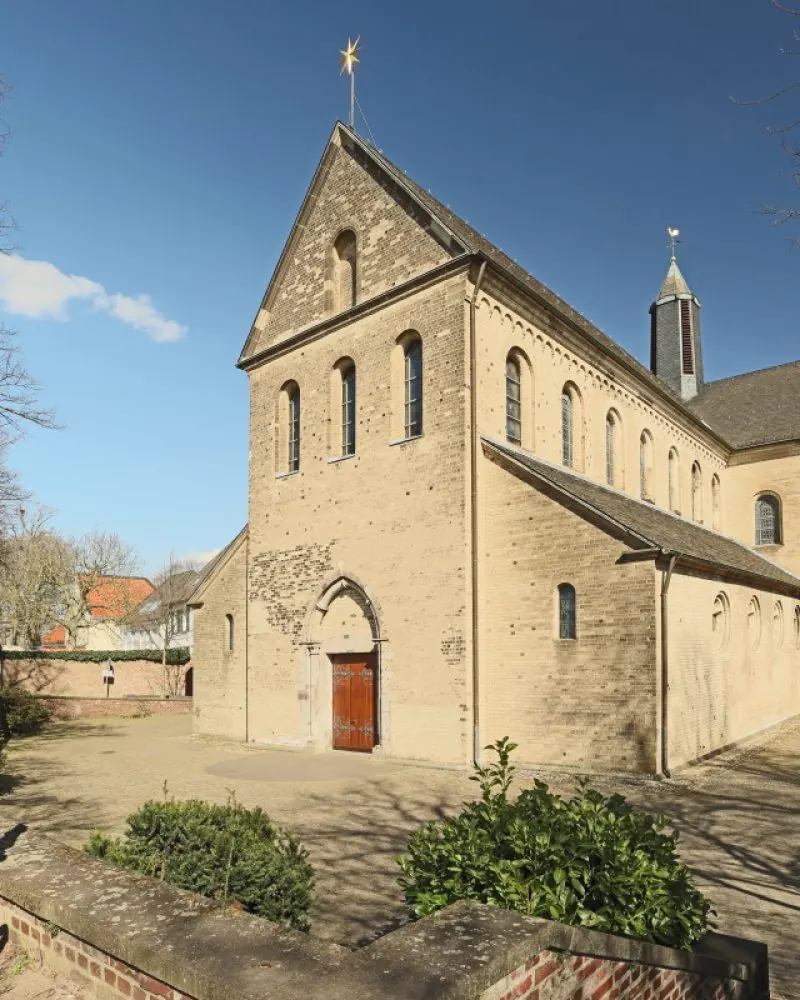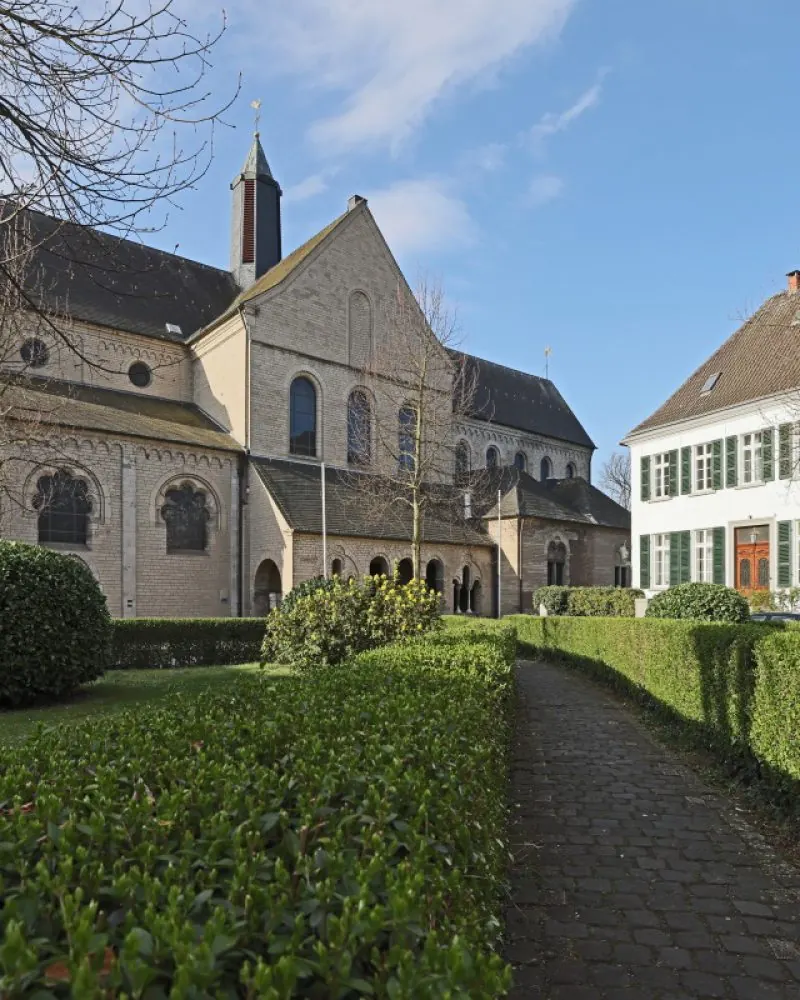

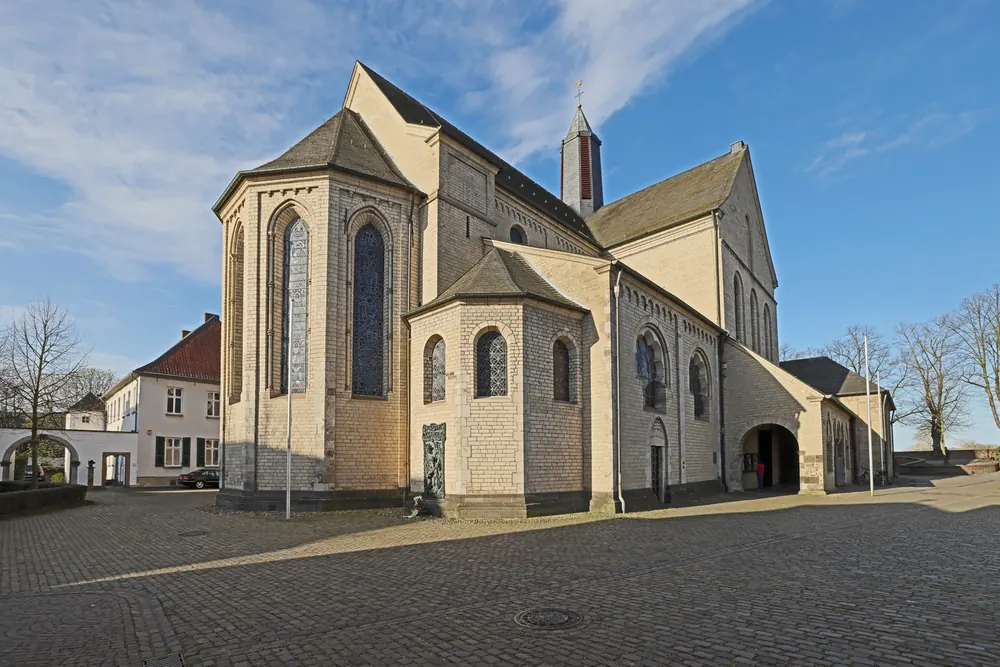
• St Suitbertus Basilica and its forecourt in the sunshinePhoto: Michael Quack
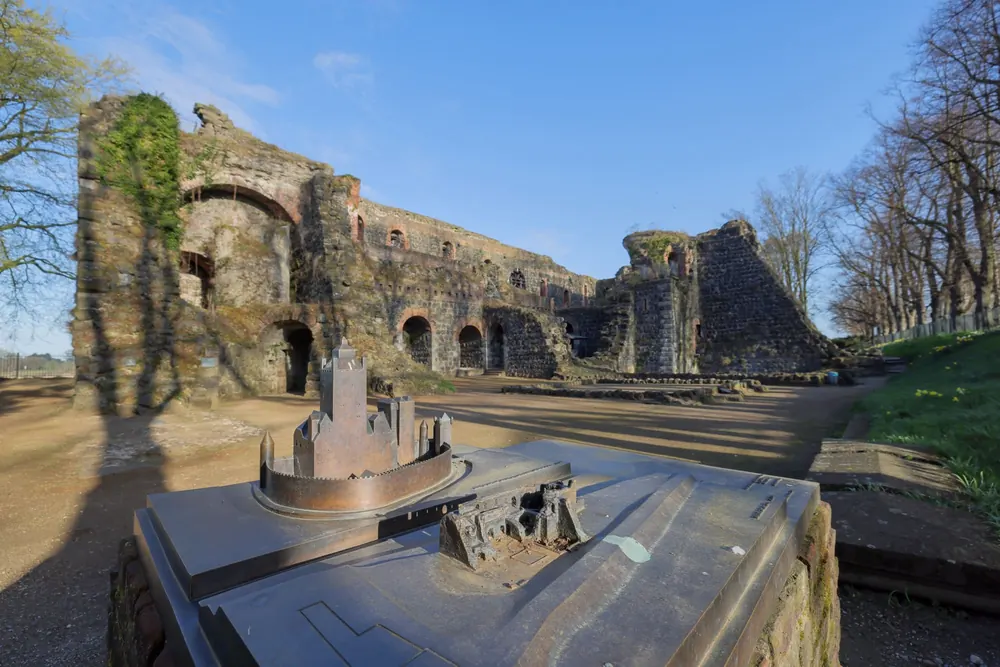
  • Bronze model of the imperial palace in front of the ruinsPhoto: Michael Quack
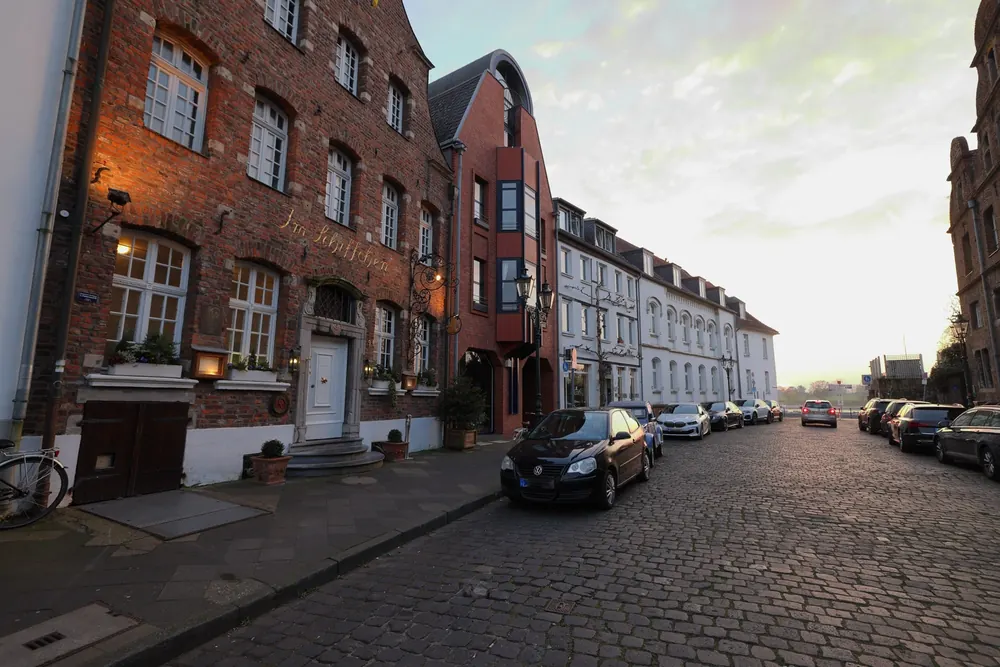
  • Row of historic houses on a cobbled street in Kaiserswerth in the evening lightPhoto: Michael Quack
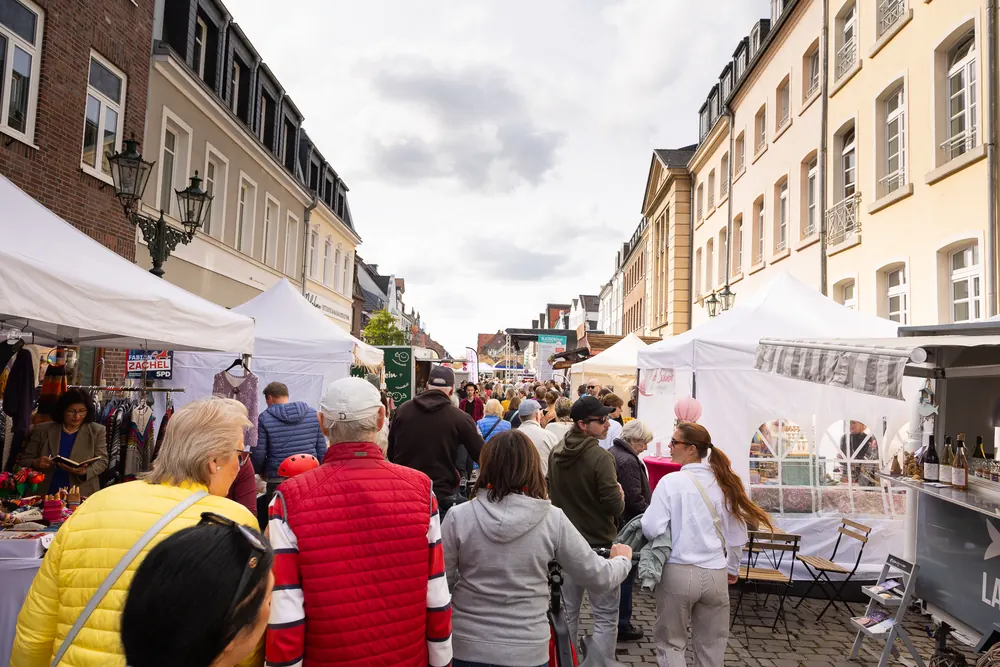
  • Crowds on Kaiserswerther MarktPhoto: Monica Ladberg
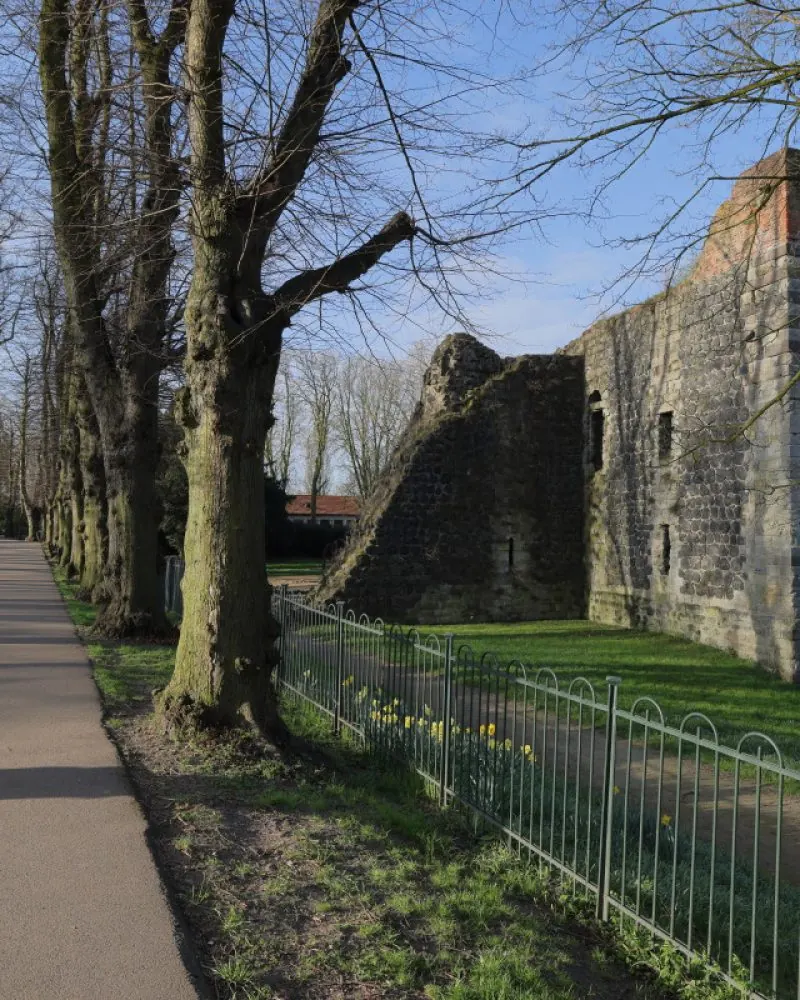
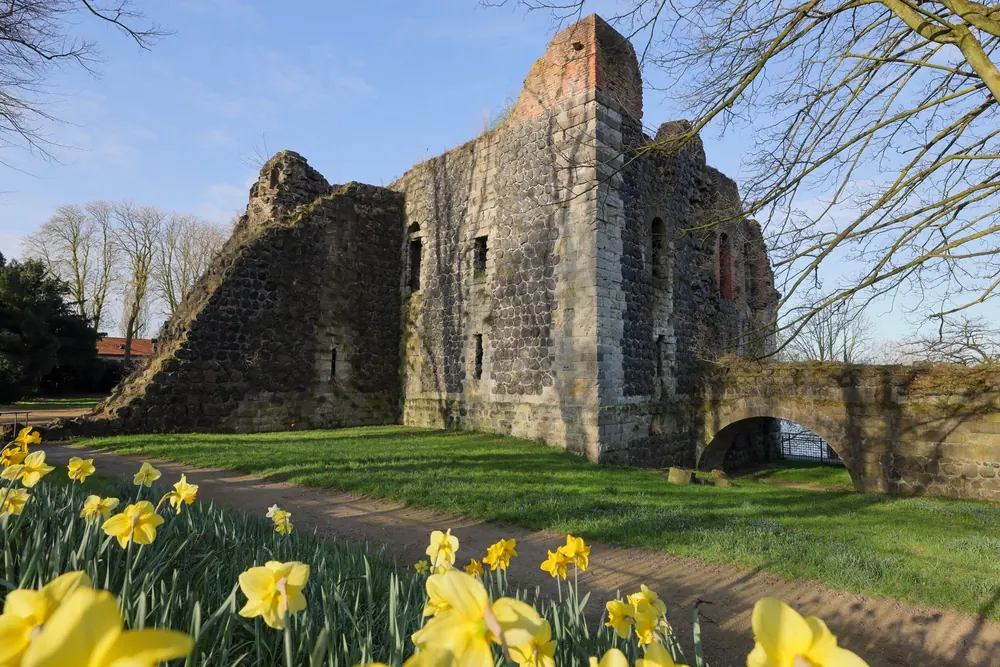
  • Ruins of the imperial palace with daffodils in the foregroundPhoto: Michael Quack
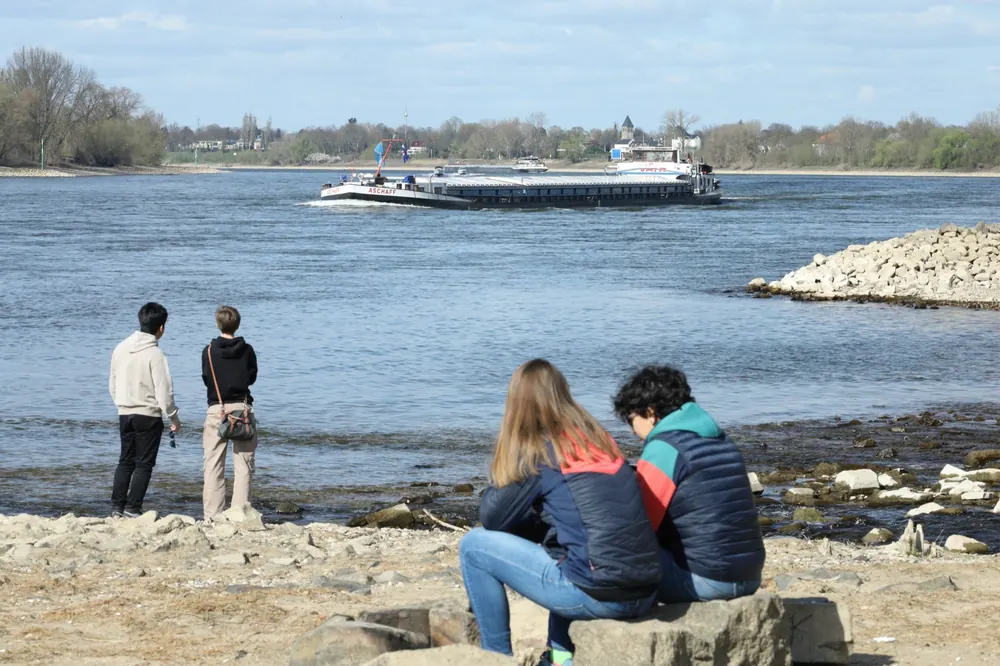
  • People on the Rhine bank with a ship passing in the backgroundPhoto: Michael Quack
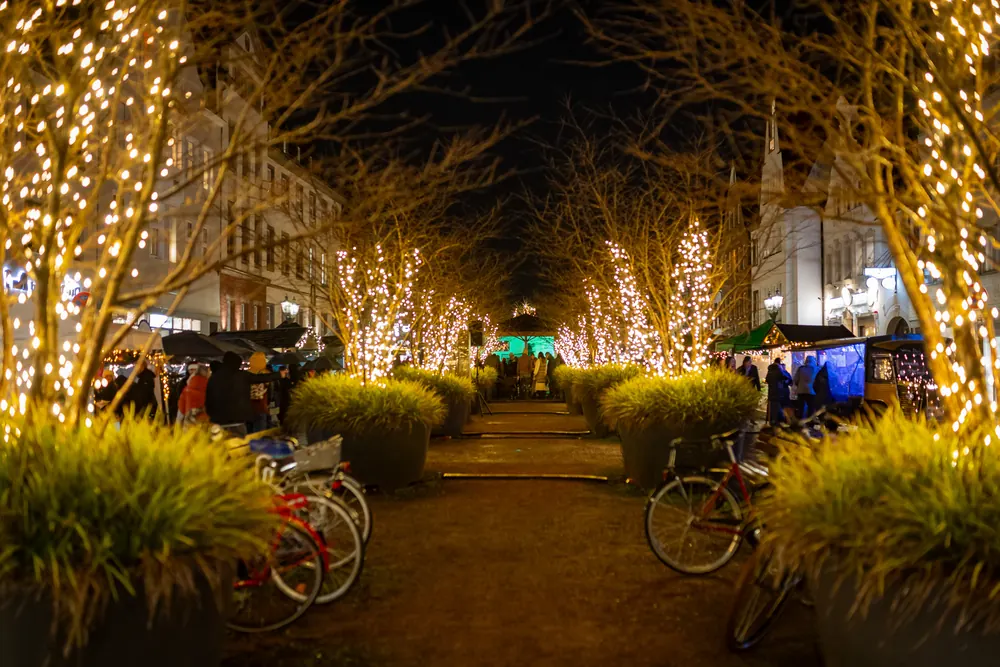
  • Festive lights in the eveningPhoto: Monica Ladberg
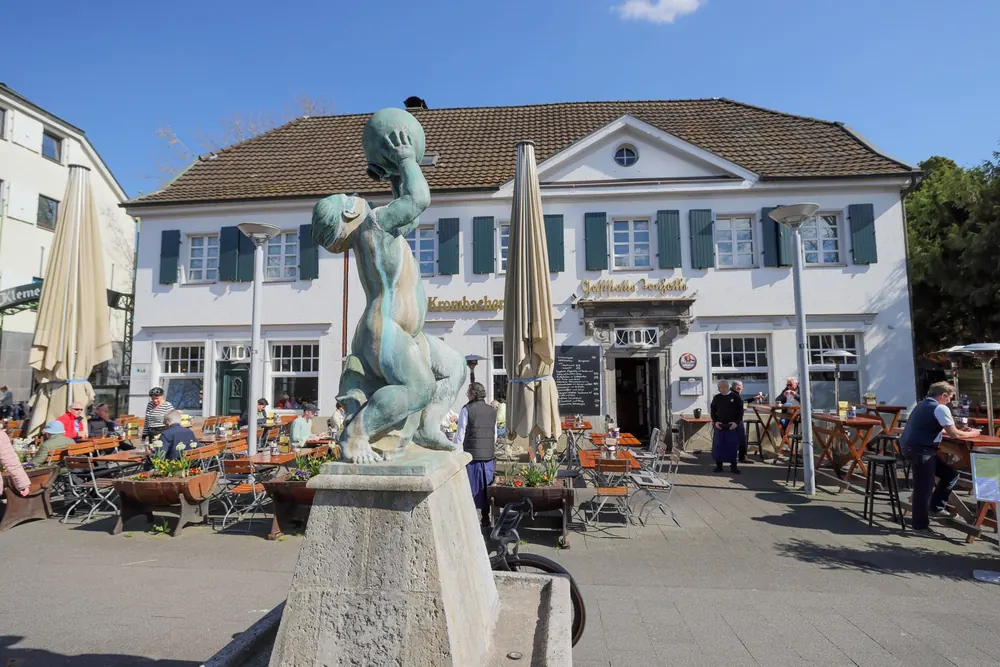
  • Tonhalle restaurant on Kaiserswerther Markt with a fountain statue and outdoor tablesPhoto: Michael Quack
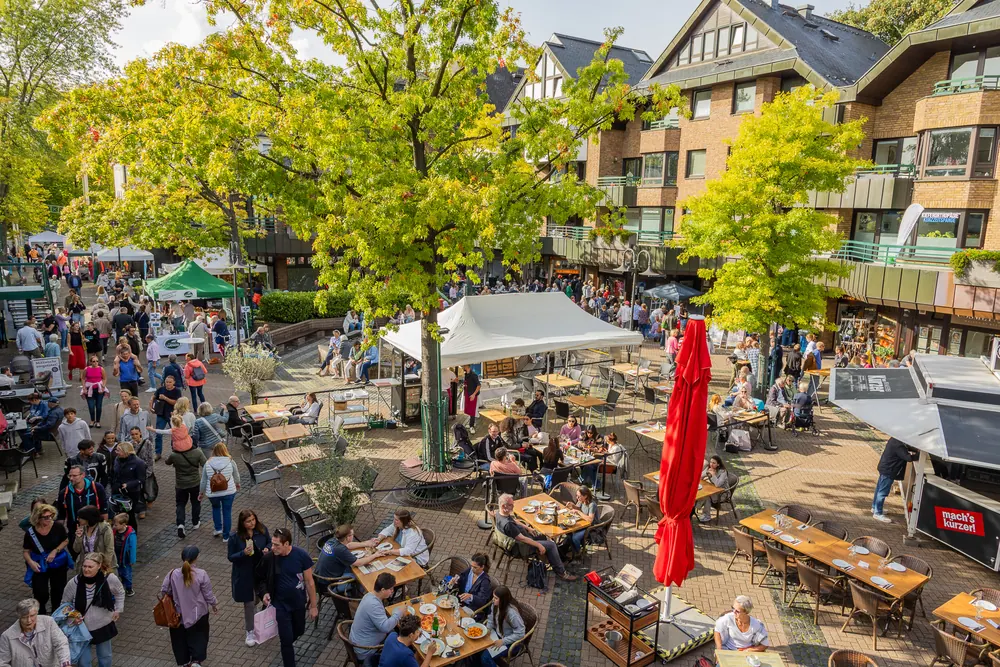
  • Stalls and visitors at KlemensplatzPhoto: Monica Ladberg

Historical walk through Kaiserswerth

The historical walk takes you to the most important sites and shows how tradition and modern life are harmoniously combined in Kaiserswerth.

  • 14 stops
  • approx. 1.2 km route
  • approx. 15 min walking time

Start the tour

Suggested order: shortest route from the Klemensplatz stop, calculated in a straight line. Length and walking time are roughly rounded, without stops.

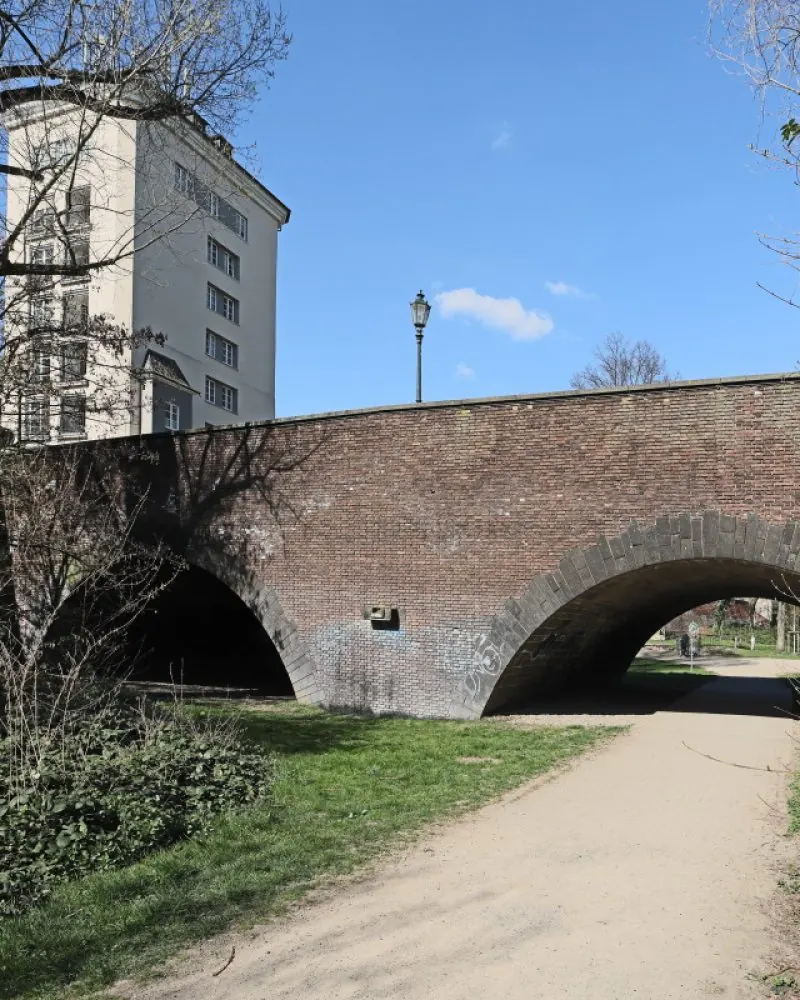
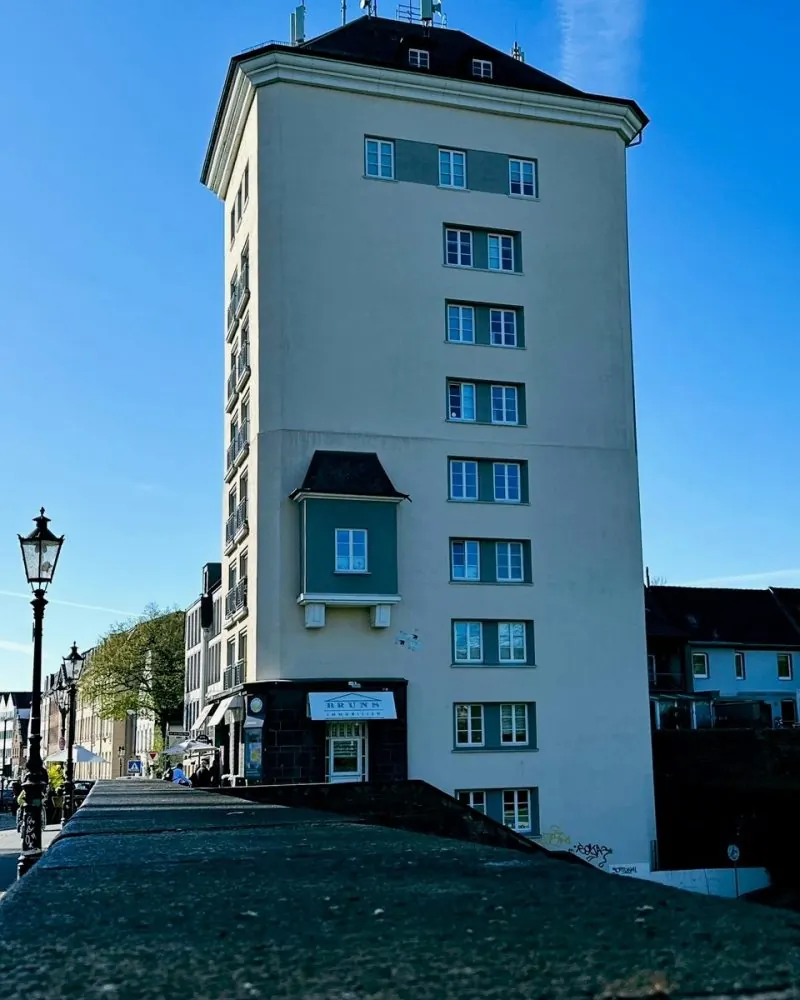
  1. Klemens Bridge over the former arm of the RhineHigh-rise at Klemensplatz, the former bunker

    Stop 1: Klemensbrücke

    From Klemensplatz, a bridge leads across the now dry arm of the Rhine to the former island (Werth) with the fortified town of Kaiserswerth.

    On either side, an old memorial stone can be seen in the parapet masonry. They come from an earlier bridge on the same site and were found during the construction of the bunker (today's high-rise building!).

    On the left, the double-headed eagle bears witness to the former imperial rule in Kaiserswerth

    The right-hand plaque records the building of the bridge by Elector Clemens August and gives the year of construction, 1759, in a chronogram
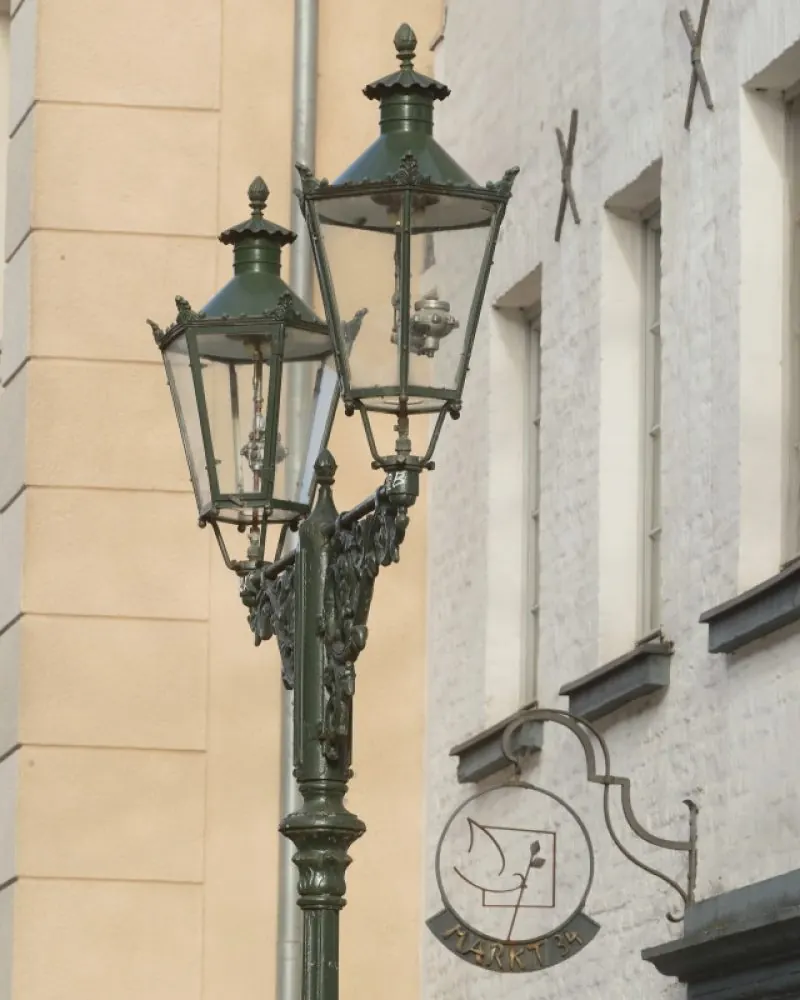
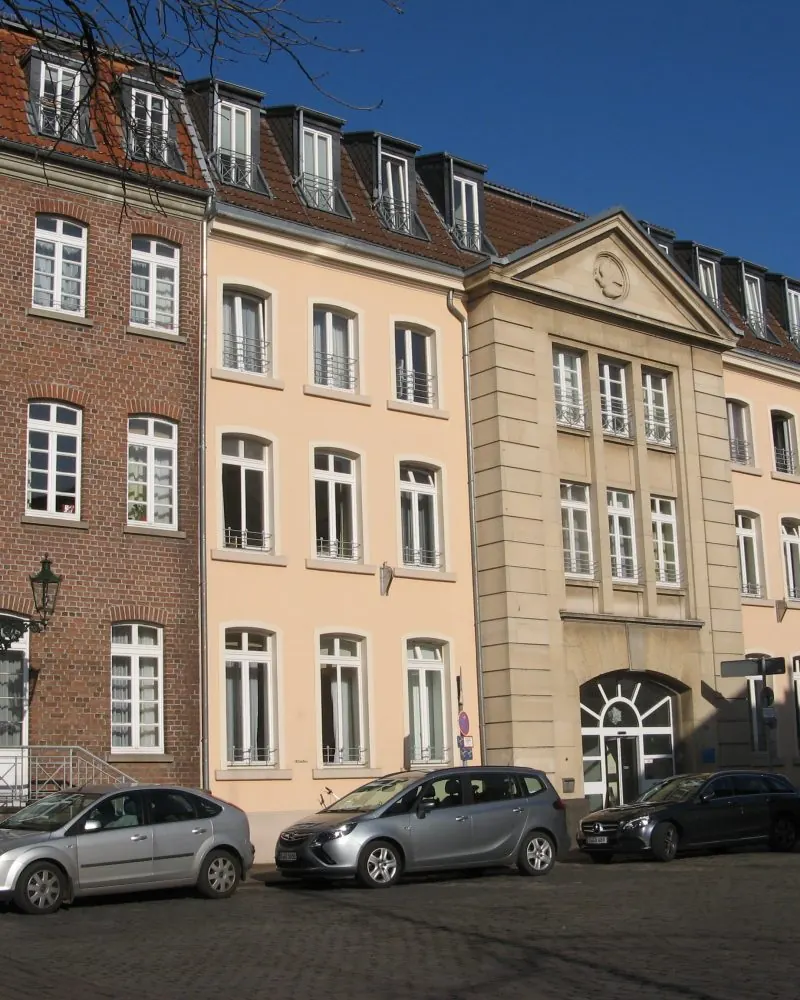
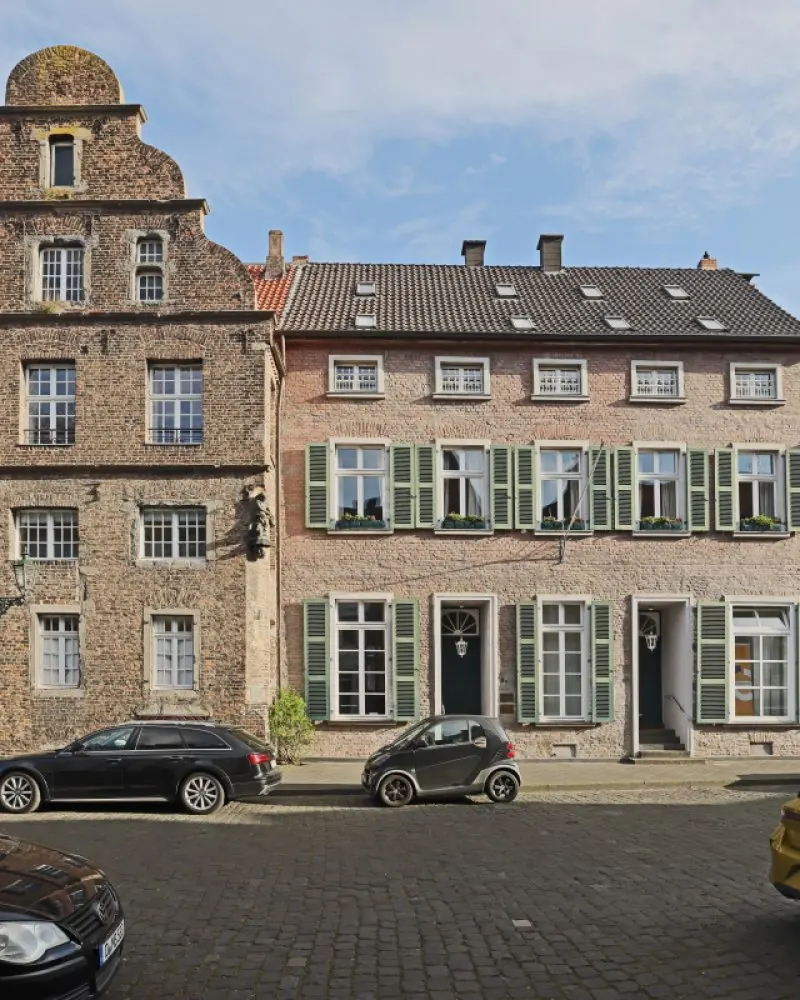
  2. Historic lanterns on a façade on Kaiserswerther MarktThe row of houses of the Stammhaus on Kaiserswerther Markt

    Stop 2: Stammhaus

    On Kaiserswerther Markt, the Protestant pastor Theodor Fliedner bought several houses. He set up a hospital here and in 1836 began training Protestant deaconesses.

    This row of houses thus became the first motherhouse and parent house of the Deaconess Institute, which later worked in many countries in various social fields.

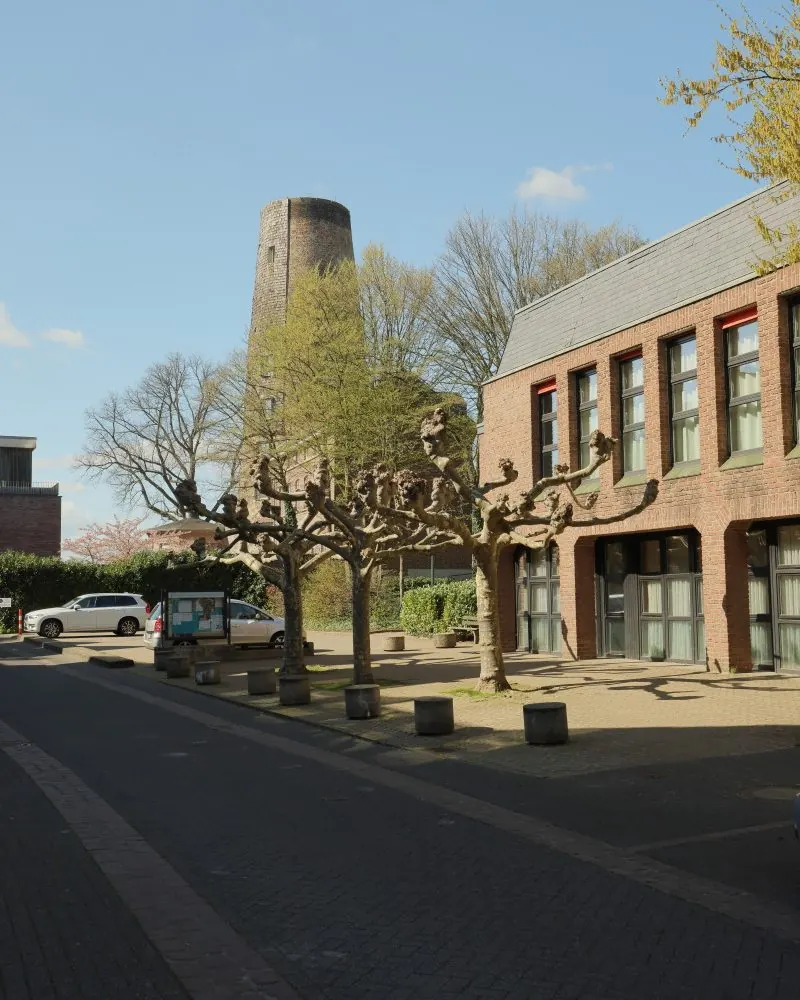
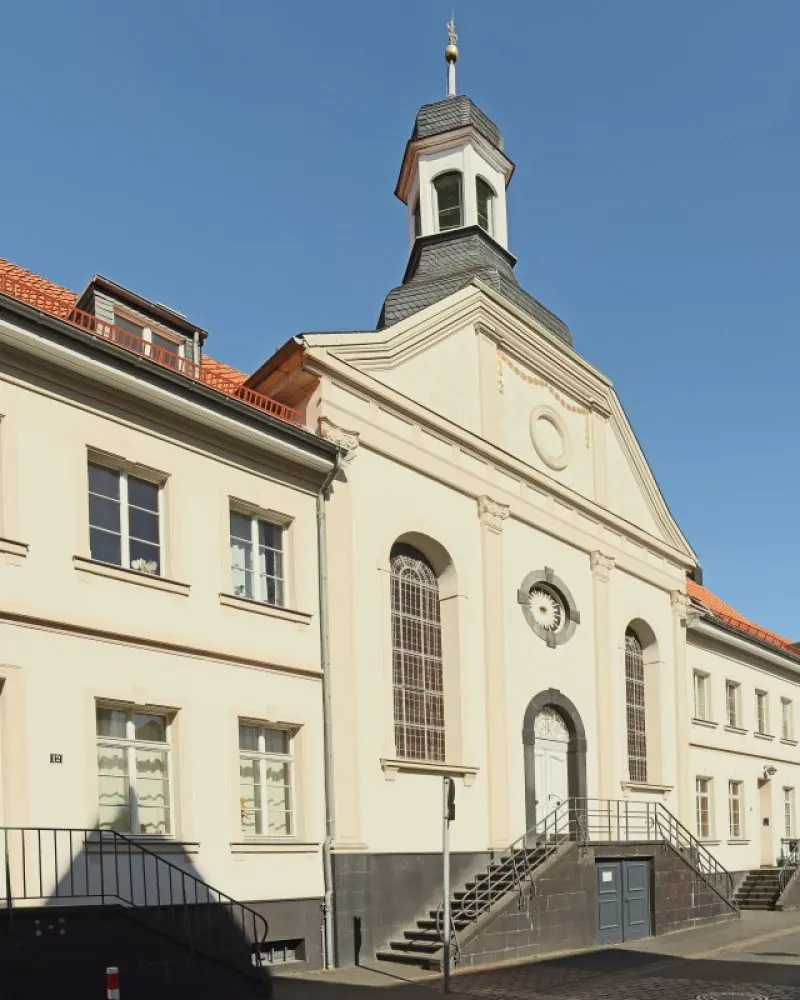
  3. Square with the mill tower and buildings in the old townProtestant town church in Kaiserswerth with its bell turret

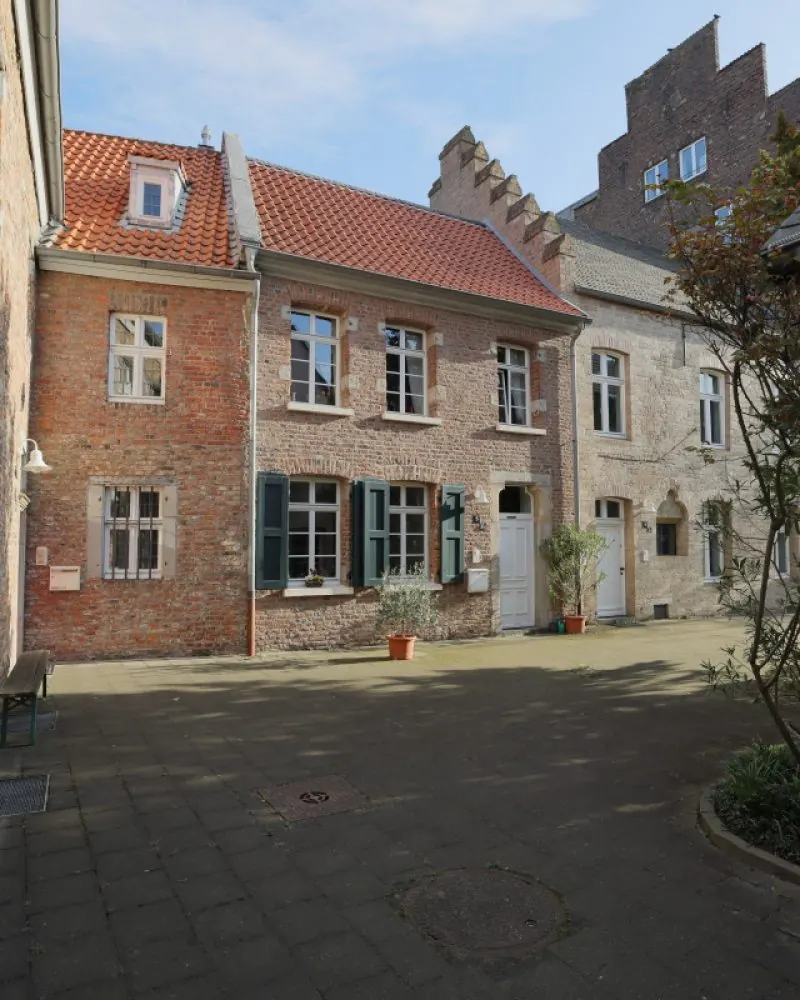
    Stop 3: Vicarage

    The vicarage, on the left of the picture, was the nucleus of the Diakonie and Pastor Fliedner's first training centre.

    Florence Nightingale, later the “angel of mercy” of the Crimean War, also lived here as a young student.

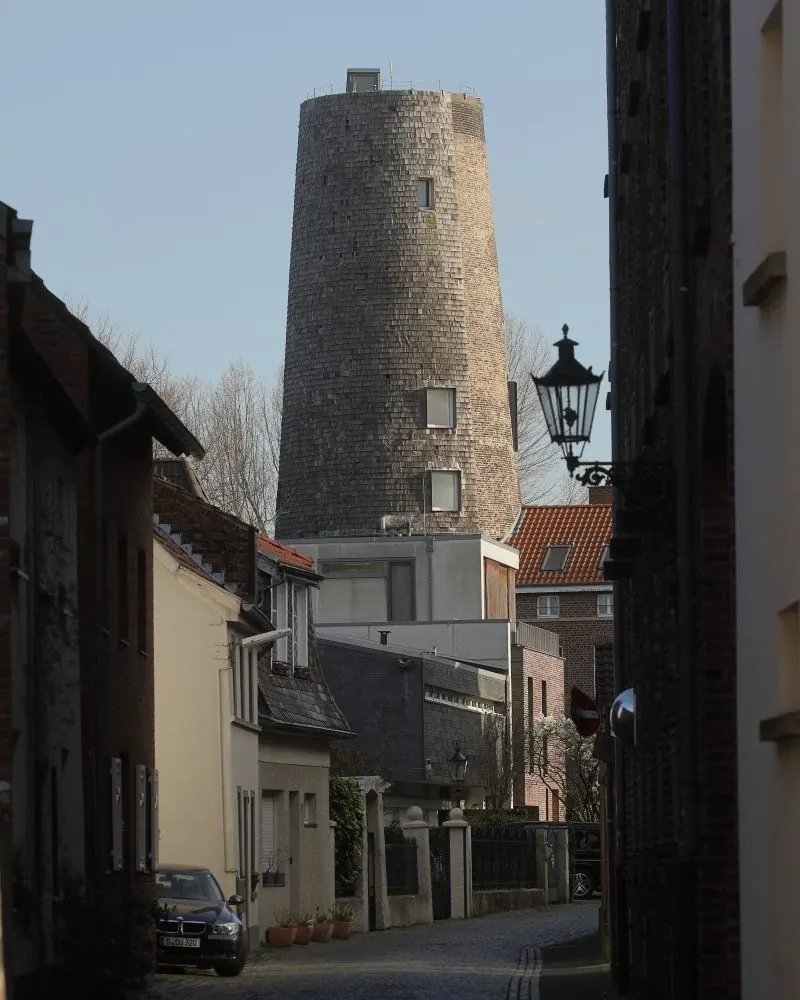
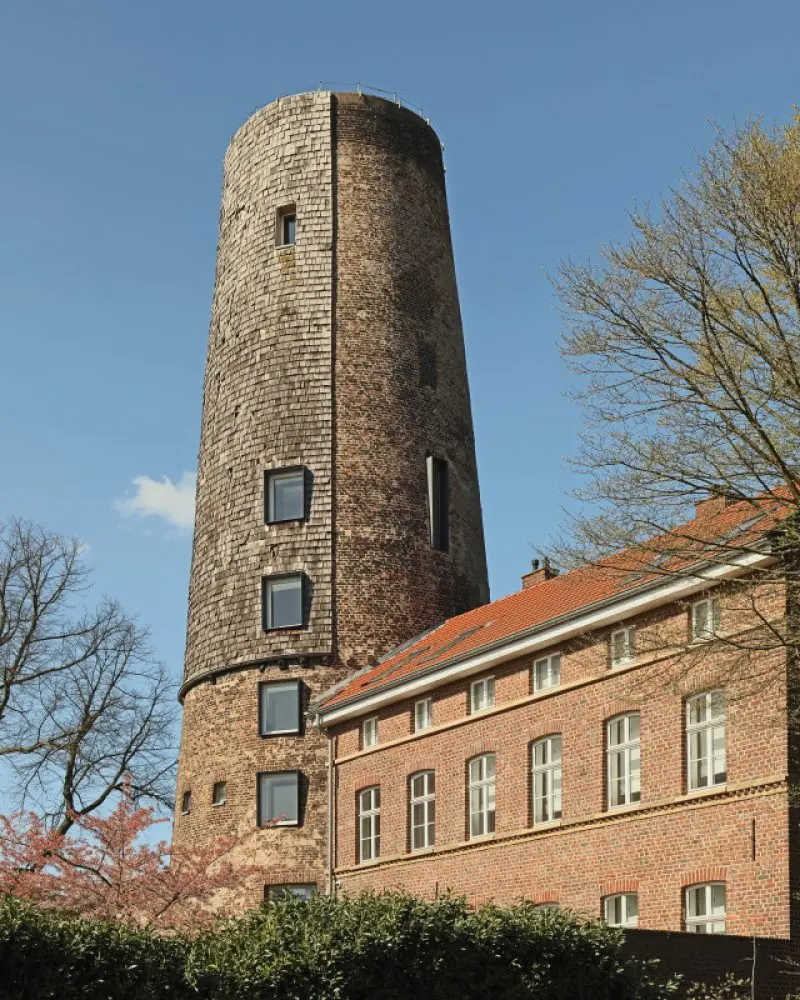
  4. The lane Am Mühlenturm with the mill towerMill tower against a blue sky

    Stop 4: Am Mühlenturm

    Several historic buildings can be found in the lane “Am Mühlenturm”. Among them is house no. 8, one of the few buildings to have survived the destruction of 1702.

    On the other side of the lane is the long façade of the old barracks, which Pastor Fliedner converted in 1852 into the first asylum for mentally ill women.

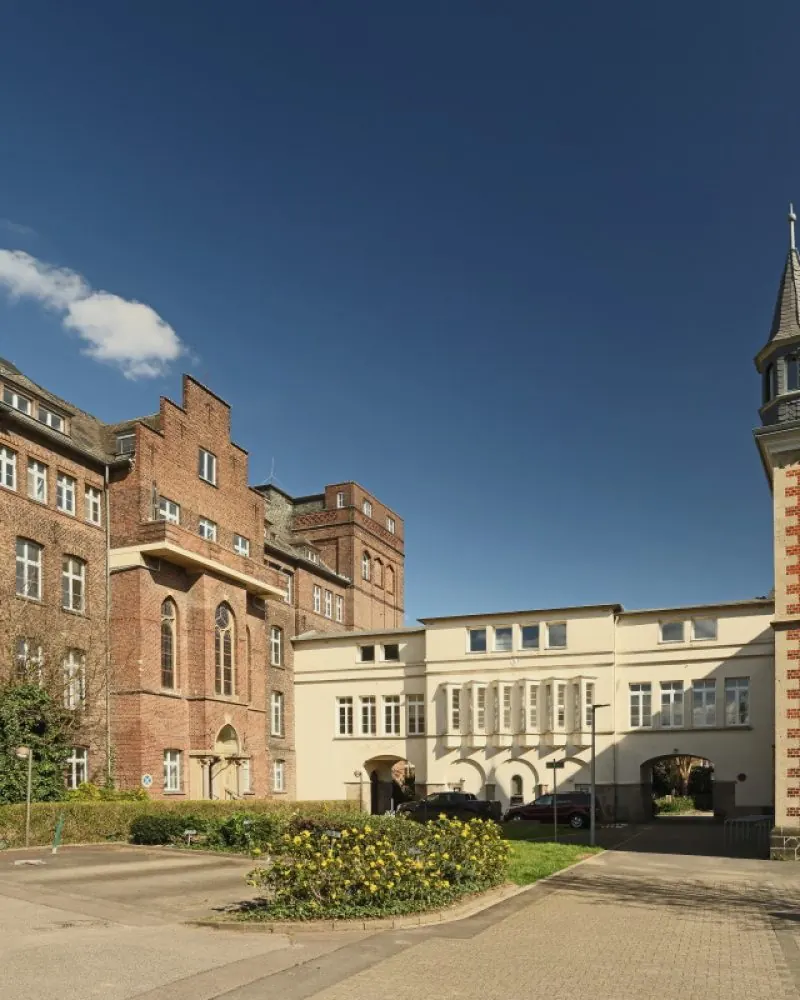
  5. The Romanesque House with its stepped gableHistoric buildings on the hospital grounds

    Stop 5: The Romanesque House

    In the neighbouring hospital grounds lies this house, which has been extensively researched and restored in recent years. It was built in the mid-13th century as the house of a canon of the collegiate foundation. Particularly striking are the Romanesque windows on the east side and the stepped gables. Thanks to its exceptionally good state of preservation, this tuff-stone building is one of the most important residential buildings from the Romanesque period in Germany.

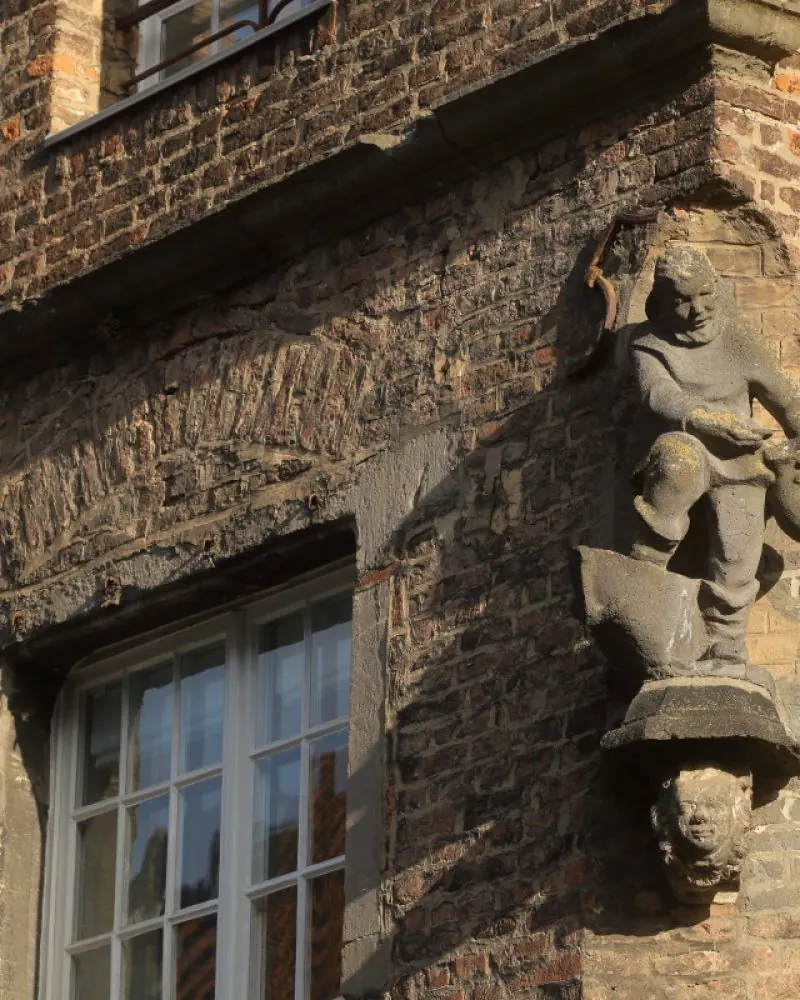
  6. Stone figure on the façade of the old customs houseBaroque houses on Suitbertus-Stiftsplatz

    Stop 6: Zollhaus (Customs House)

    The old customs house is the most magnificent surviving house from the period before the destruction of Kaiserswerth in the War of the Spanish Succession in 1702.

    On the courtyard side, the tower from which the customs officers monitored shipping on the Rhine still stands.

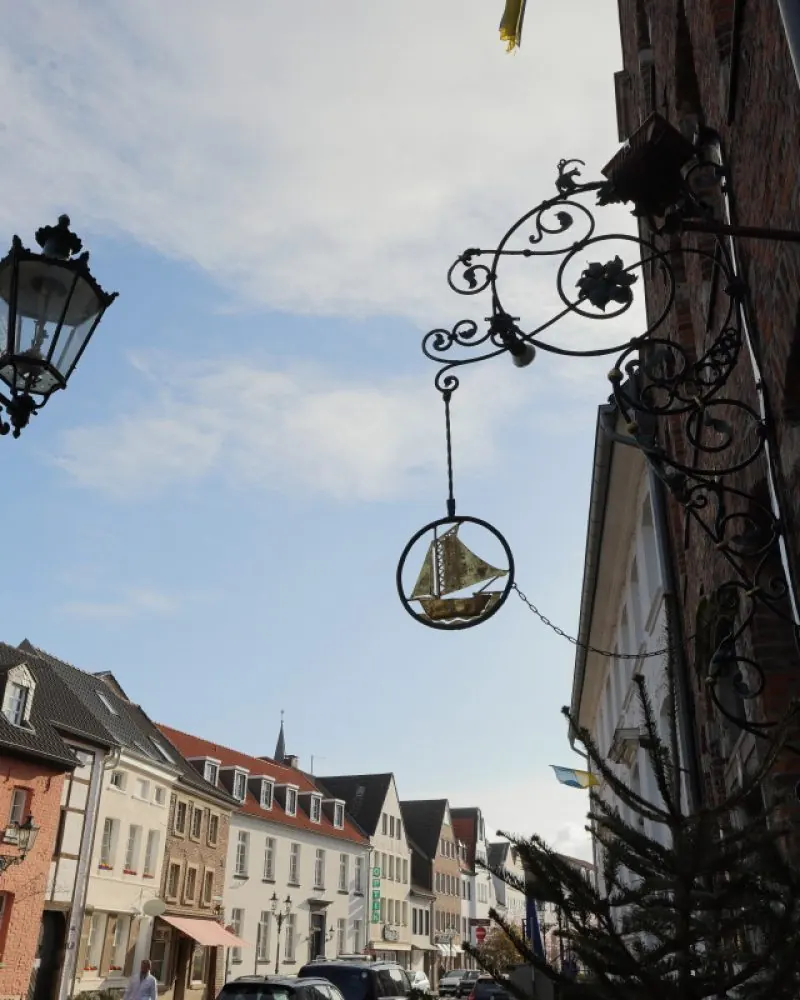
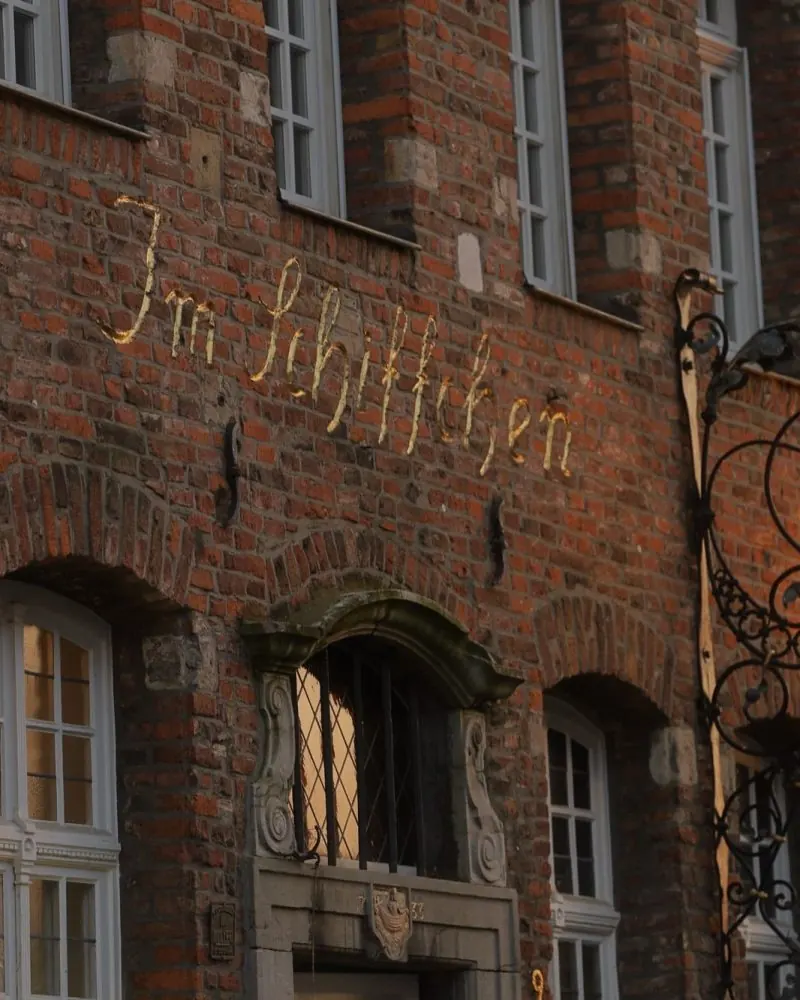
  7. Wrought-iron inn sign with a little ship in the old town“Im Schiffchen” lettering on the brick façade of the inn

    Stop 7: “Im Schiffchen” inn

    The inn “Im Schiffchen” stands on Kaiserswerther Markt.
    Today it is a highly acclaimed restaurant. Built of brick, with five window axes, it is adorned above the portal with the sign of a boat and the year 1733. The brass knob of the solid oak door shows the star twice: the symbol of Kaiserswerth's patron saint, Suitbertus.

    To the left of the Schiffchen are two houses that once belonged to the silk weaver Preyers.

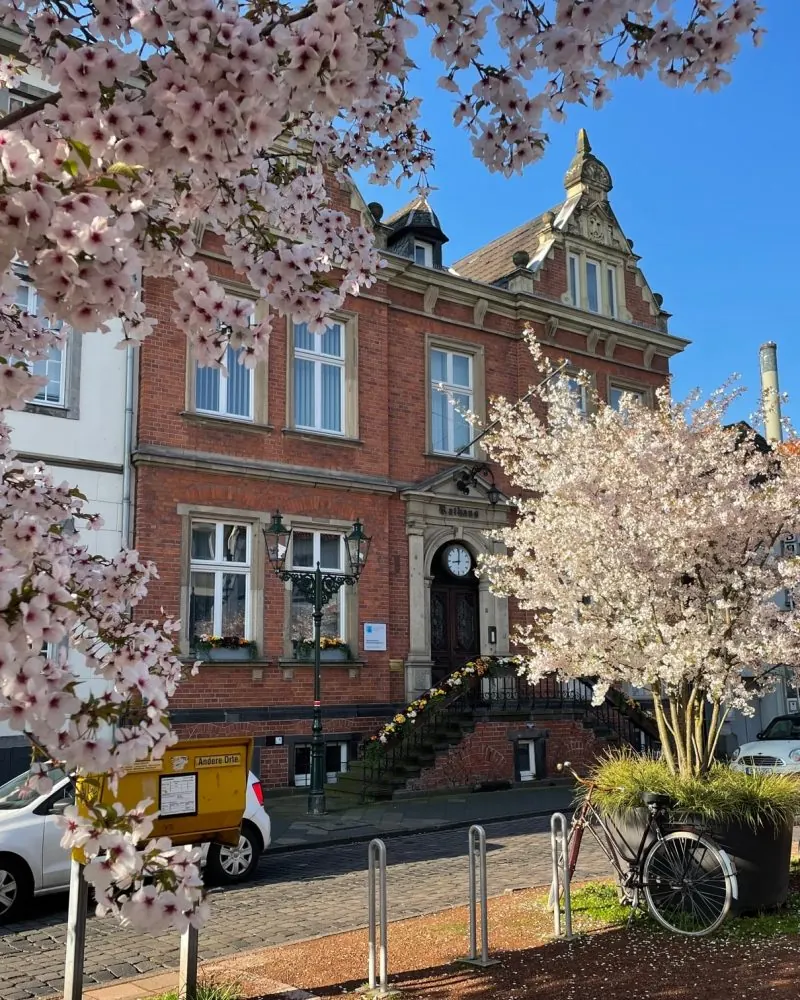
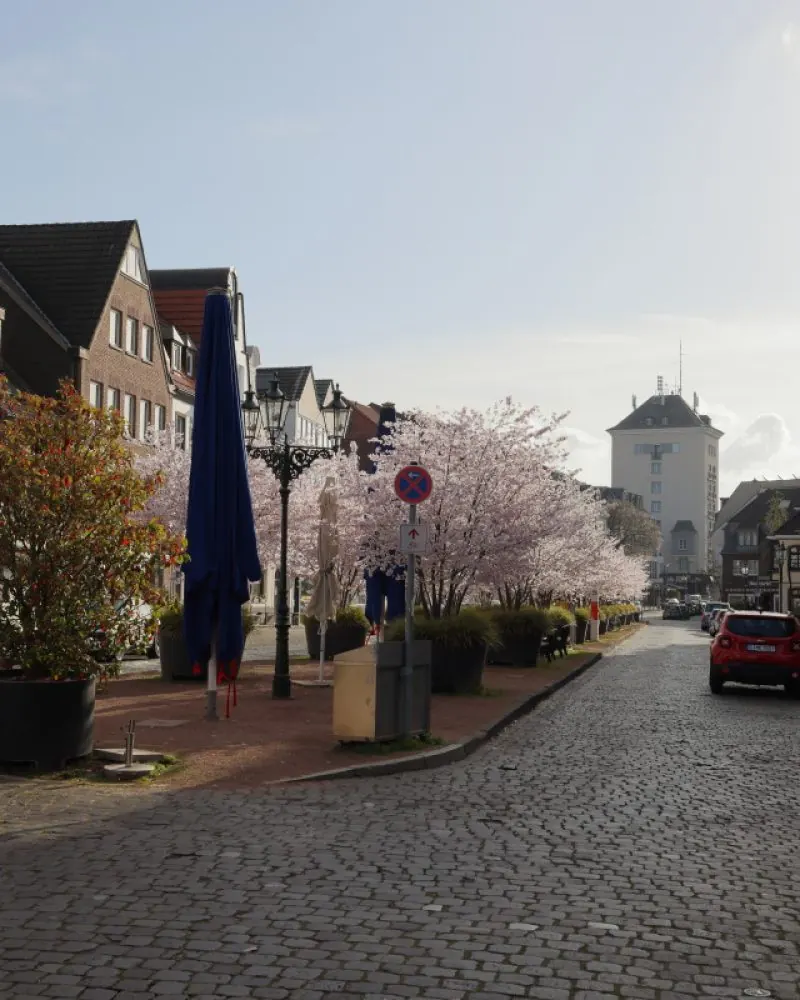
  8. Kaiserswerth town hall behind blossoming cherry treesCobbled street with cherry blossom by the market

    Stop 8: Rathaus (Town Hall)

    Until its incorporation into Düsseldorf in 1929, Kaiserswerth was an independent town, though it never possessed a town charter. From 1181 at the latest, however, all the conditions were met for it to be called a town. At that time the collegiate foundation gave up its vineyards on what is now the market square so that new building land was available for the townspeople.

    The old town hall once stood on the central strip of the market square. It was destroyed during the siege of 1702 and never rebuilt. The last Kaiserswerth town hall today houses, among other things, District Administration Office 5 of the Düsseldorf city administration.

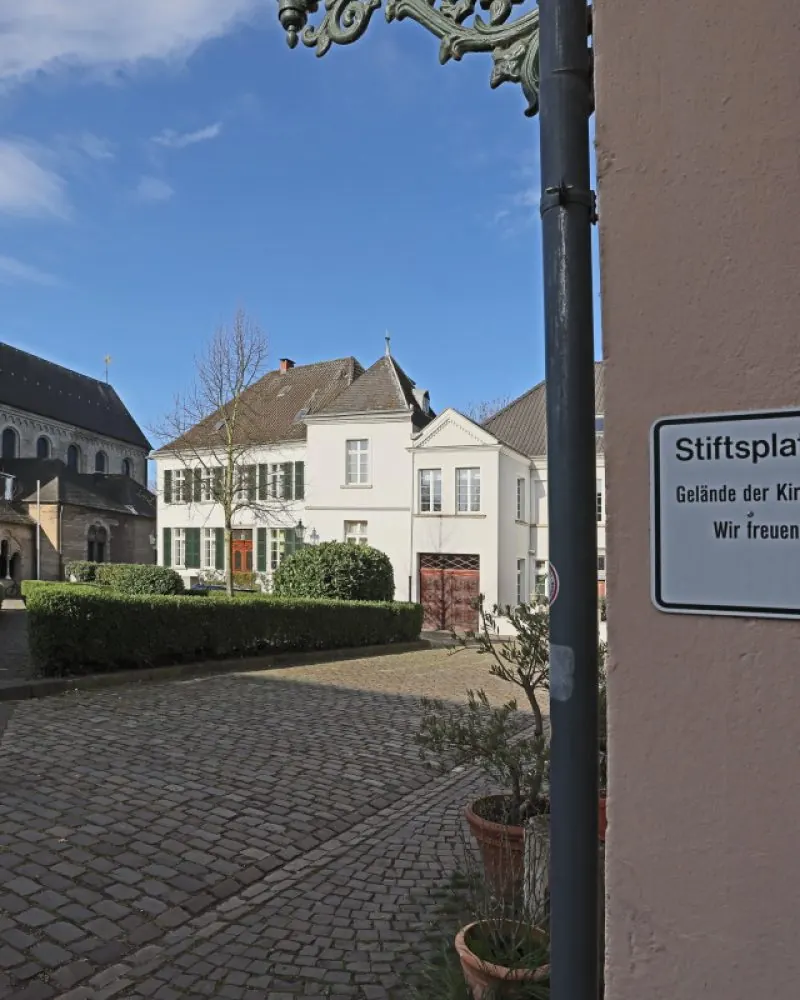
  9. Lane by Suitbertus-Stiftsplatz with a view of the basilicaBaroque houses on Stiftsplatz with street sign

    Stop 9: Suitbertus-Stiftsplatz

    Thanks to its quiet location and its unbroken ring of buildings, the square is one of the most beautiful squares of the Lower Rhine.
    In the 11th century, Suitbertus's monastery became a collegiate foundation of canons. Most of today's buildings date from the first half of the 18th century, the period of reconstruction after 1702.

    Most of the houses were built by the canons. Several coats of arms and inscriptions bear witness to this.

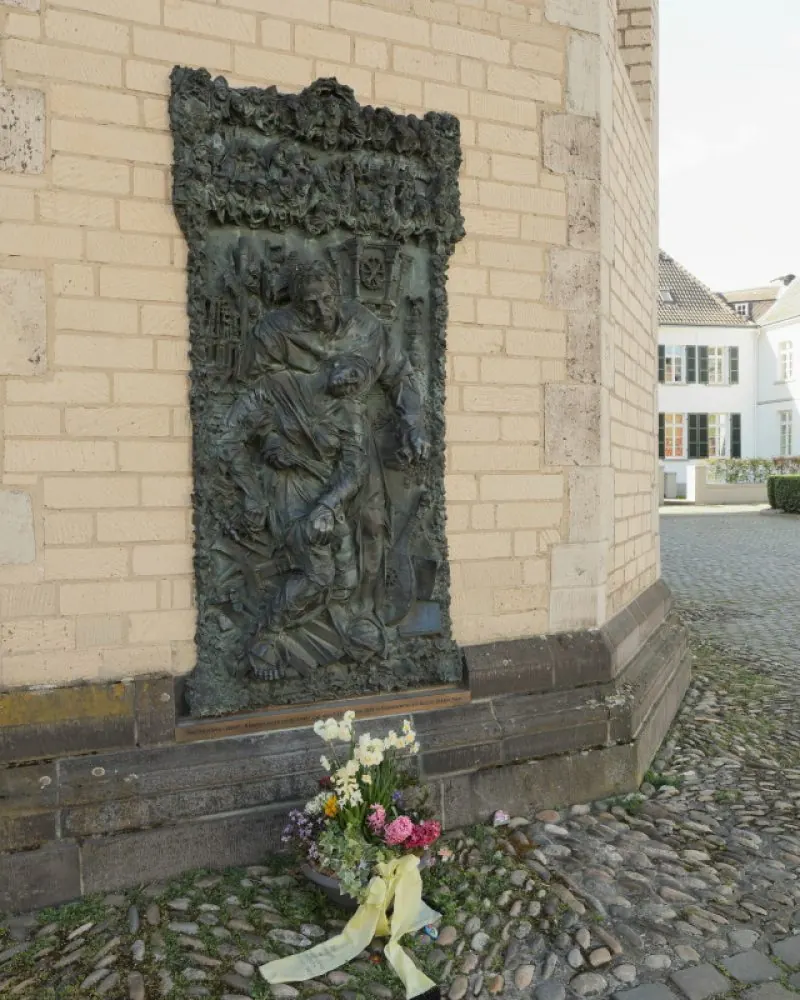
  10. Spee epitaph by Bert Gerresheim on the basilicaEast side of St Suitbertus Basilica

    Stop 10: Spee Epitaph

    On the east side of the basilica, this epitaph by the Düsseldorf artist Bert Gerresheim was installed in 1991 to mark the 400th anniversary of Friedrich Spee's birth. Friedrich Spee was born in Kaiserswerth in 1591. As a Catholic theologian and Jesuit, he was particularly moved by the suffering of women persecuted and condemned as witches. The epitaph therefore shows Friedrich Spee supporting one of these suffering women.

    In his left hand he holds his treatise against the witch hunts, the “Cautio Criminalis”. Spee is also regarded as an important writer of the Baroque period. Songs from his collection “Trutznachtigall” are still sung in church services today. He contracted the plague while nursing infected soldiers and died in Trier in 1635.

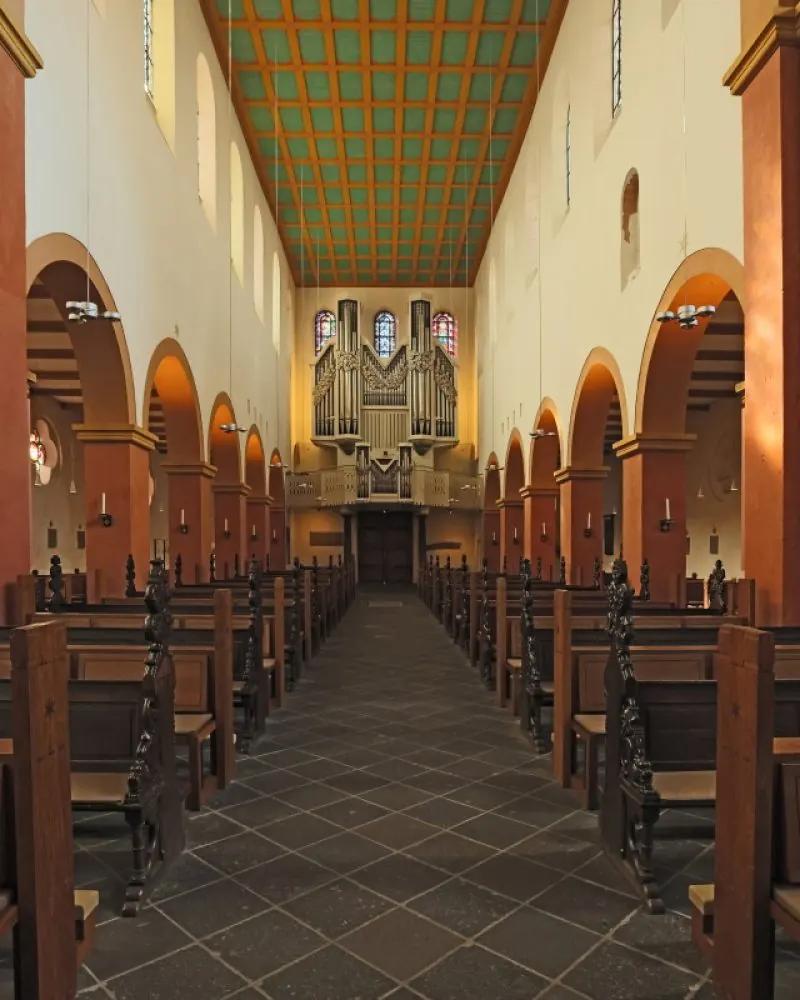
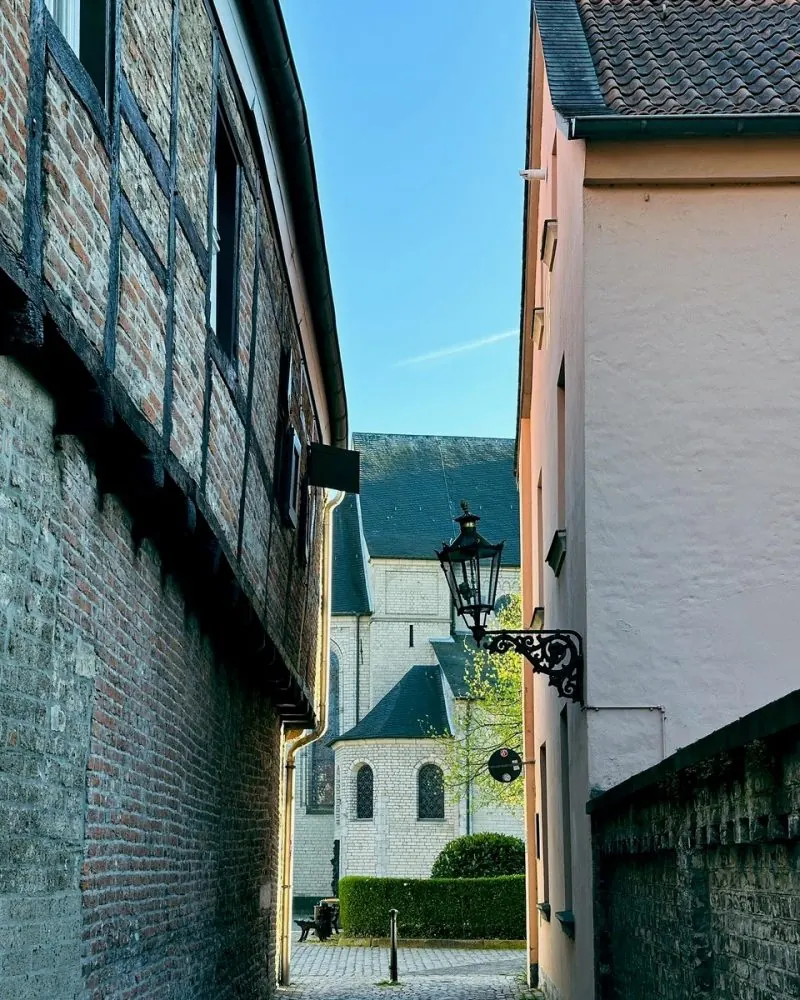
  11. Interior of St Suitbertus Basilica looking towards the choirView through a narrow lane towards St Suitbertus Basilica

    Stop 11: Basilica of St Suitbertus

    The Suitbertus Basilica was built between the 11th and 13th centuries. In the Second World War it suffered severe damage both outside and inside. After extensive restoration work, it is once again regarded as one of the most beautiful pillared basilicas of the Lower Rhine.

    Following the founding of a monastery on this site by the Anglo-Saxon Benedictine Suitbertus around 700, the present church is the latest in a succession of several church buildings.

    The church's most precious possession is the 13th-century shrine containing the relics of St Suitbertus.

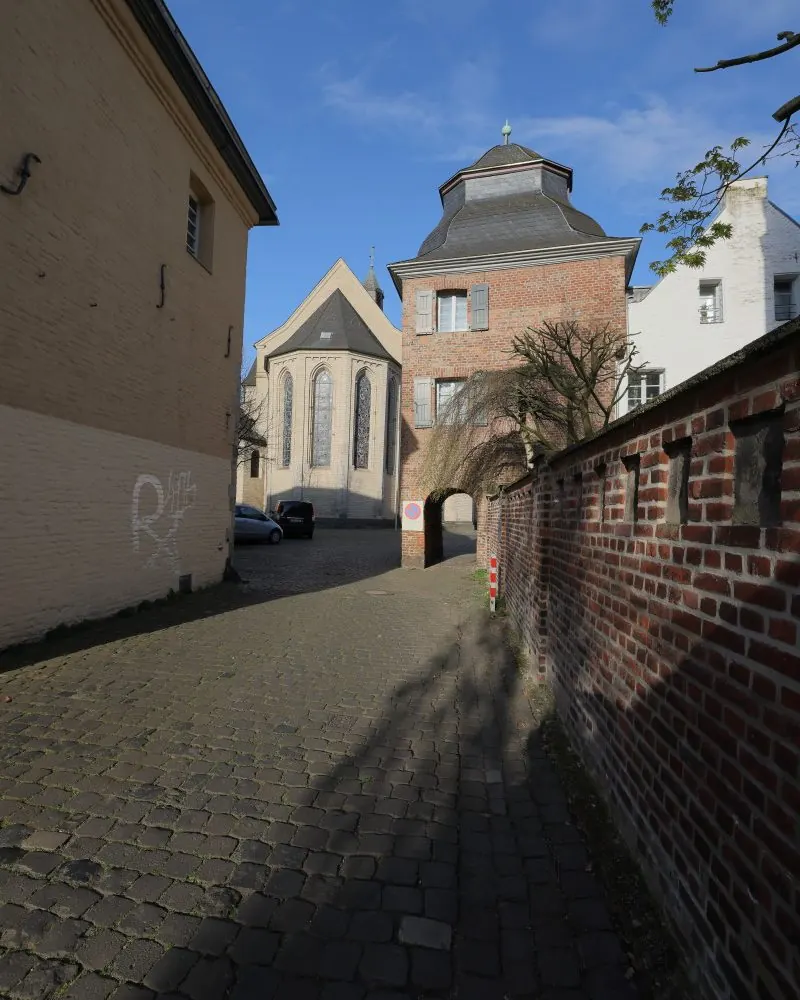
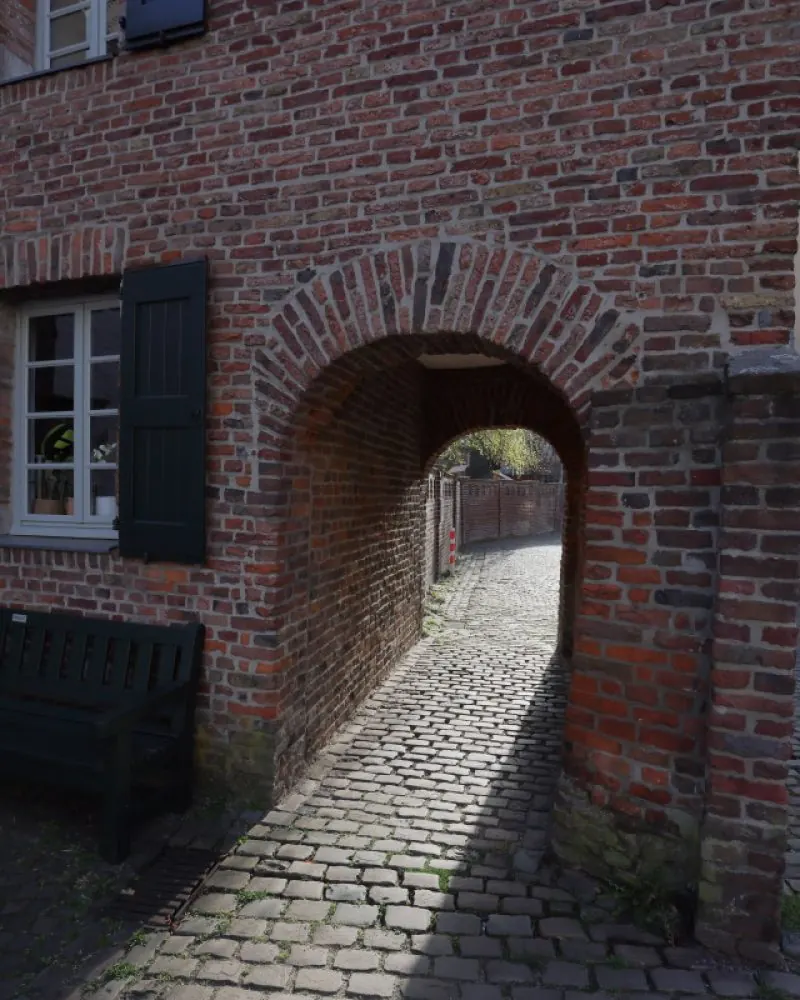
  12. St Suitbertus Basilica seen from StiftsplatzArchway with cobblestones on Stiftsgasse

    Stop 12: Propstei (Provost's House)

    One of the most imposing Baroque houses in Kaiserswerth is the former provost's building (no. 3). The Latin inscription above the main entrance reads: “The brothers Anton and Heinrich Norff, provost and dean of this church, built this house.”

    Today it is the presbytery of the Catholic parish.

    At right angles to it, on the east side of the square, stands the elongated school and tithe house from the days of the collegiate foundation.

    On Stiftsgasse, the gate tower, the former entrance to the square, bears witness to the foundation's right of immunity.

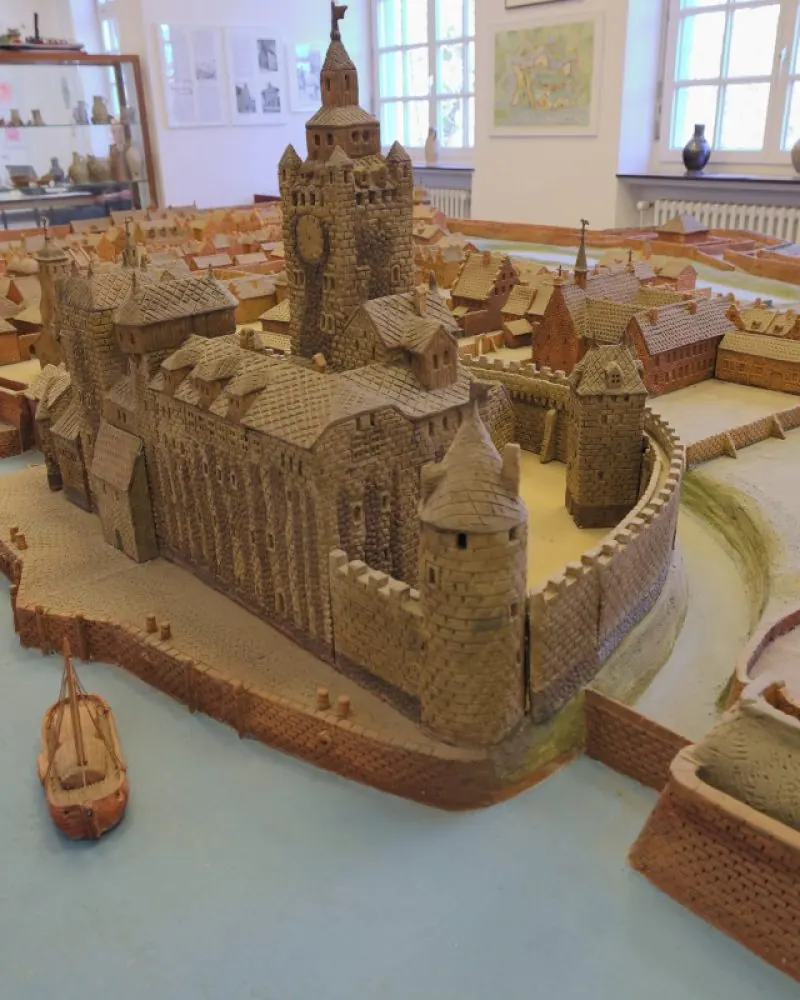
  13. Wall of the imperial palace beside a tree-lined pathModel of the imperial palace as it once was

    Stop 13: Kaiserpfalz

    A royal court is believed to have stood on this site in the 7th century. Over the centuries it developed into a castle, which was then expanded into an imperial palace (Kaiserpfalz) by Henry III in the Salian period.

    The remains of the Kaiserpfalz visible today date from the building erected by the Hohenstaufen Emperor Frederick I “Barbarossa” around 1180.
    During the War of the Spanish Succession, the palace experienced its last great siege and subsequent destruction in 1702.

    Various restorations from the beginning of this century to the present day have sought to preserve the monument.
    Today's flood embankment cuts through the former palace grounds.
    Directions:

    The Kaiserpfalz in Düsseldorf-Kaiserswerth lies directly on the banks of the Rhine.
    It can be reached by:

    – light rail line U79, Klemensplatz stop
    – car parks on Niederrheinstraße and An St. Suitbert
    – Kaiserswerth boat landing stage
    – Kaiserswerth / Langst ferry

    The Kaiserpfalz is open from May to the end of October, daily 10 am – 6 pm.

    www.kaiserpfalz-kaiserswerth.de

  14. Stop 14: Haus Freiheit

    A few steps further along Burgallee towards the Rhine ferry, the last house on the old St Balthasar bastion is “Haus Freiheit”.

    Hedda and Herbert Eulenberg lived and worked here.

Map

Famous people of Kaiserswerth

  • Caspar Ulenberg

    1548–1617

    parish priest in Kaiserswerth, Catholic theologian, poet and composer of hymns

  • Theodor Fliedner

    1800–1864

    pastor in Kaiserswerth, Protestant theologian, founder of the Kaiserswerth Deaconess Institute

  • Herbert Eulenberg

    1876–1949

    lived and worked in Kaiserswerth · poet and dramatist

  • Friedrich Spee

    1591–1635

    born in Kaiserswerth, Catholic theologian, poet and composer of hymns, campaigner against the witch craze

  • Florence Nightingale

    1820–1910

    student in Kaiserswerth, reformer of military nursing